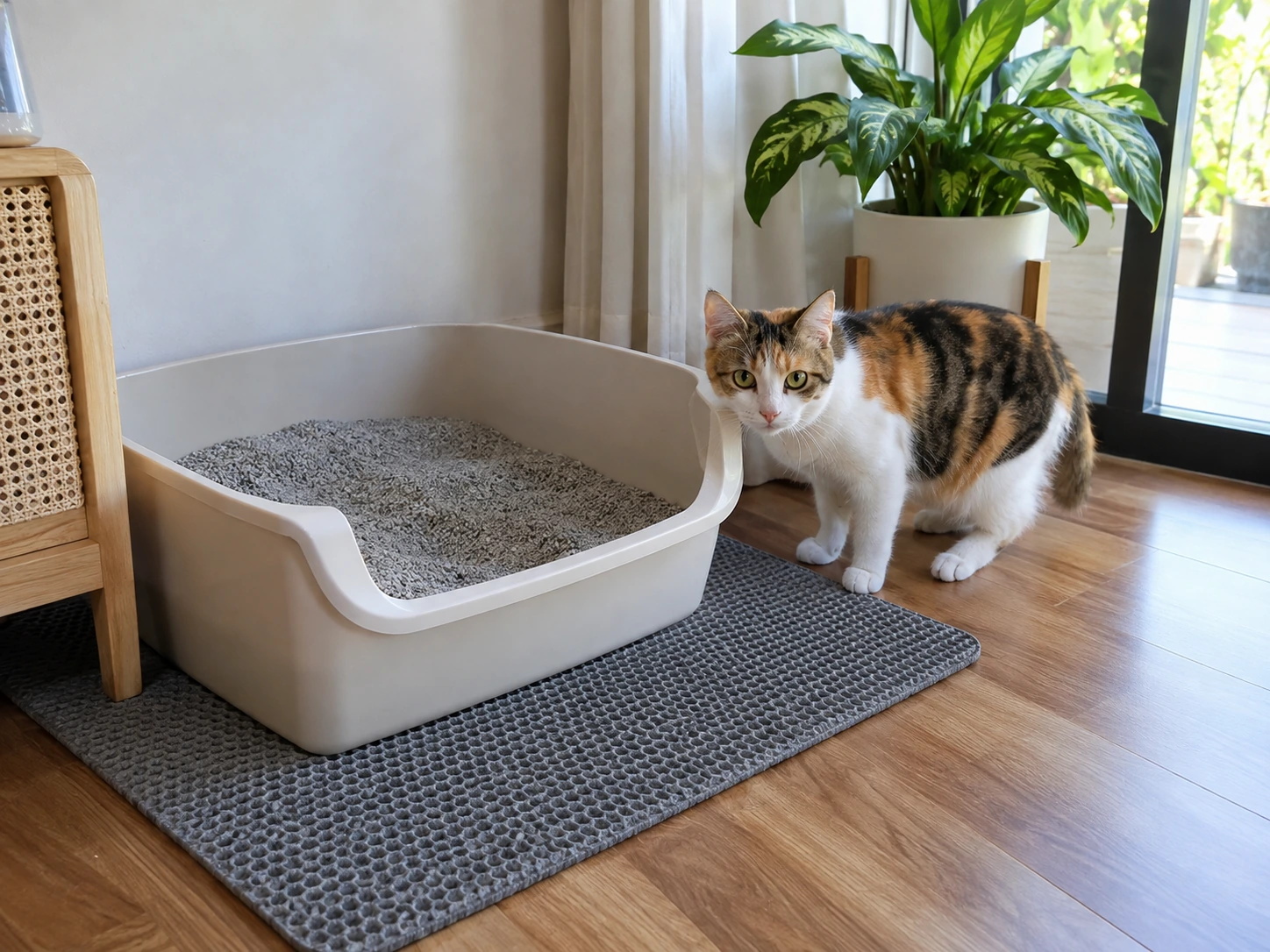
Choose Litter That Suits Your Cat and Your Home
Six tips for choosing cat litter: your space, number of cats, household health, your cat’s habits, long-term cost and correct use.
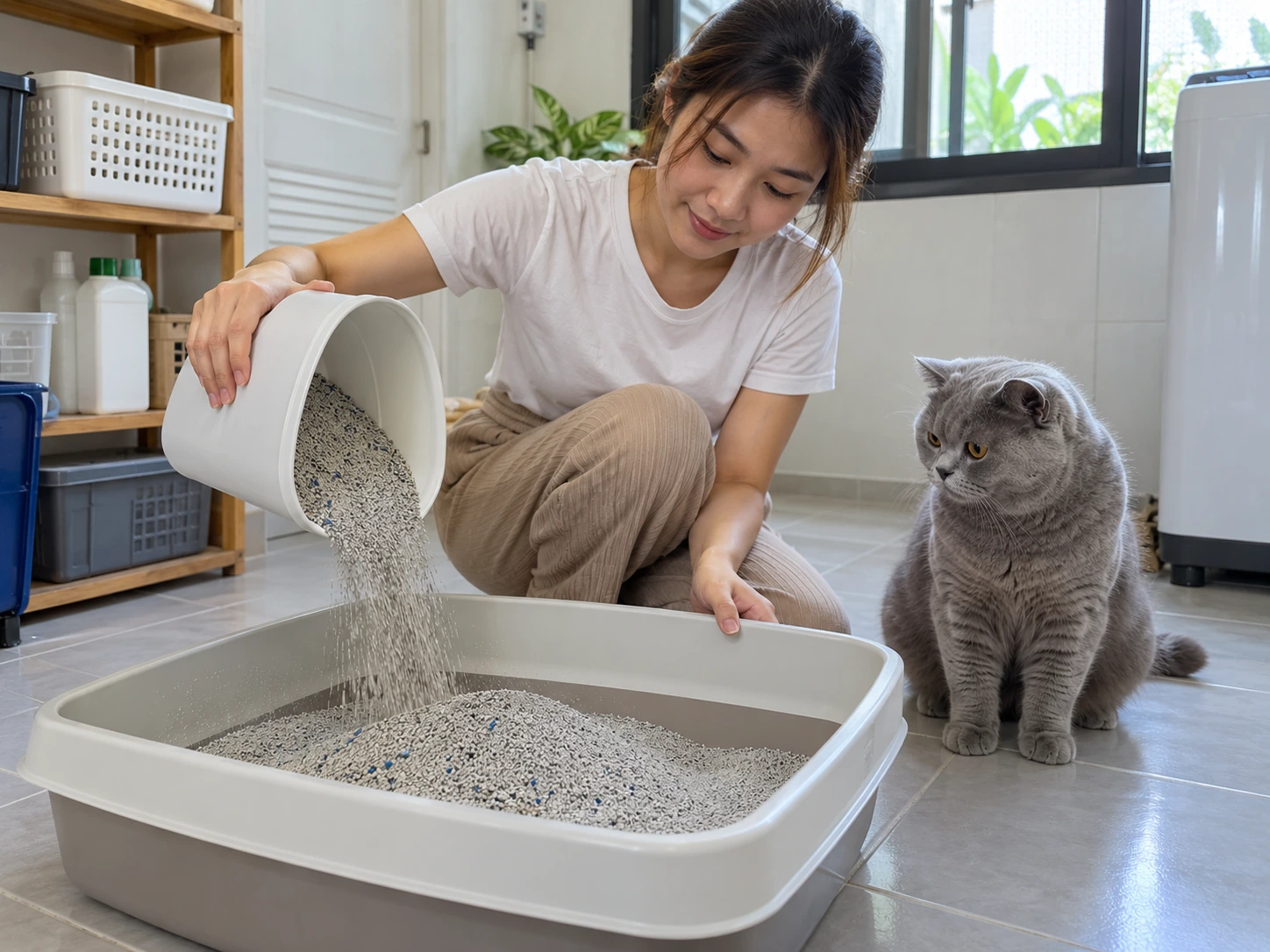
A bag of cat litter might seem like a small decision
but it has a direct bearing on how clean your home stays, the health of the people in it, and how comfortable your cat feels every time it steps into the tray.
Ask which cat litter is best and the honest answer is that no single type is best for every home. Choosing cat litter well means weighing six things together: the size of your home, how many cats you have, the health of the people and cats in the household, your cat’s behaviour, long-term budget, and how you use it. This article takes each in turn and explains which litter properties matter most in each case.
1. Consider the Size of Your Home
If space is limited, make odour absorption and dust level your first priorities.
In an apartment or a room with little airflow, odour from the tray builds and spreads through the room faster, and dust lingers in the air longer. Look for a litter that absorbs odour quickly, right after your cat has used the tray, and one that’s low in dust.
A larger house with good airflow gives you more flexibility, since odour disperses. You can weight convenience of scooping and value for money more heavily. That said, if the tray sits near the living room or a bedroom, odour should still come first.
2. Factor in How Many Cats You Have
The more cats, the more you need litter that clumps firmly and controls odour well.
Daily waste volume rises with the number of cats. A litter that forms firm clumps lets you remove only the soiled portion without the clump crumbling as you lift it, so the rest stays usable and you avoid emptying the whole tray often — which costs both time and money.
Make sure you have enough trays, too. The general guidance is one tray per cat plus one — three trays for two cats, for example — which reduces stress and territorial behaviour.
Bag size, on the other hand, doesn’t need to follow the number of cats. Litter is a recurring purchase, so a small bag is useful for a first trial to see whether your cat accepts it. Once you’re confident, a larger bag is more convenient and better value, whether you have one cat or several.
3. Think About the Health of Everyone in the Home
If anyone in the household is sensitive to dust, make low dust your main criterion.
Where someone has allergies or asthma, or where there are young children whose respiratory systems are still developing, choose a litter clearly labelled as low-dust, and watch how much dust rises when you pour or scoop it. The same applies to cats with respiratory problems, pregnant cats and nursing cats, all of which should inhale as little dust as possible.
Beyond dust, choose a litter made without harmful chemicals ฃ, since cats lick their paws regularly after leaving the tray. And always keep the bag out of children’s reach.
4. Watch Your Cat’s Individual Habits
A good litter is one your cat uses consistently — and cats differ.
- Cats that dig at length before going usually prefer fine granules that feel soft underfoot.
- Nervous cats, or those sensitive to smell, are best given a mildly scented or unscented litter, which can put them off the tray entirely and lead to toileting elsewhere.
- Cats that shake their paws on leaving the tray are usually signalling that they don’t like the texture or the scent of the litter they’re using.
A litter available in several scents helps here, since you can find one that both cat and household tolerate without changing litter type.
5. Work Out the Long-Term Cost Properly
Price per bag is only part of the picture. What lets you budget accurately is the cost per day in actual use.
Different litters are consumed at different rates, depending on how well they clump and absorb odour. A litter that clumps firmly and controls odour well lets you remove only what’s been used, without emptying the tray often, so one bag lasts longer — whatever the price on the bag.
A simple way to work it out, in three steps:
- See how many days one bag lasts in your home.
- Divide the bag price by that number of days to get your cost per day.
- Compare price per litre across bag sizes to pick the right size for regular use.
This shows value far more clearly than the shelf price, and lets you compare different litters fairly.
6. Use It Properly to Get the Best Performance
Used incorrectly, even a good litter won’t control odour fully.
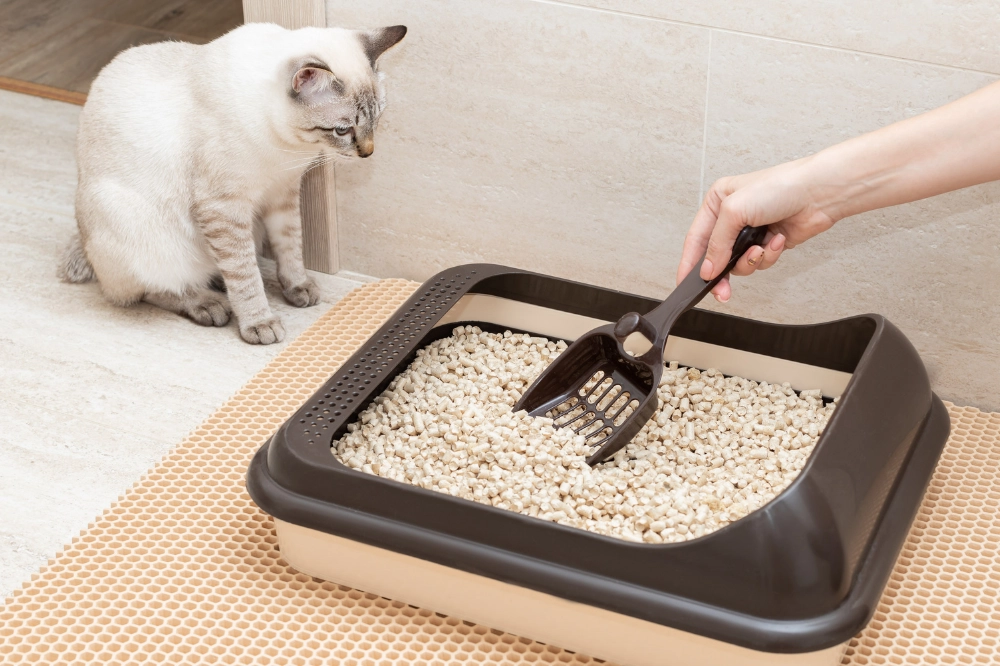
- Fill to a sufficient depth, around 8–10 cm. Too shallow and clumps stick to the base of the tray and break apart as you scoop.
- Scoop the clumps daily, at least once or twice a day. This reduces built-up odour and extends the life of the litter.
- Change all the litter and wash the tray weekly, even if you scoop every day.
- Match the tray to the use. A hooded tray helps contain odour; a high-sided tray reduces litter scattered outside it.
- Mix new litter in with the old gradually when changing brands. Start with a small proportion and build up. If your cat starts hesitating, slow down — and don’t change litter and move the tray at the same time.
How Hi-Life Bentonite Cat Litter Fits These Tips
Hi-Life bentonite cat litter brings together, in a single bag, the properties these six tips point to: quick clumping, low dust, rapid odour absorption, and a formulation made from natural bentonite with no harmful chemicals added.
| Your household situation | What you need | Hi-Life bentonite cat litter |
|---|---|---|
| Apartment, small rooms, limited airflow | Fast odour absorption, low dust | Absorbs odour quickly, low dust |
| Several cats | Firm clumps, easy scooping | Clumps quickly, easy to scoop |
| Young children or allergy sufferers | Low dust, gentle on the household | Low dust, no harmful chemicals added |
| A cat that’s fussy about scent | A choice of scents | Four scents available |
| Managing long-term cost | No frequent full tray changes | Firm clumps let you remove only what’s been used |
| Wanting to try before committing | A choice of sizes | 5L for trying out, 10L for regular use |
Frequently Asked Questions
With one cat, should I buy 5L or 10L?
The 5L size suits a first trial, to see whether your cat takes to it. Once it’s working well, 10L and above is better value and more convenient for regular use, even with a single cat.
Will my cat dislike scented litter?
Cats respond differently. Most accept it, but if your cat starts hesitating at the tray after a scent change, go back to the previous one and try again later, mixing the new litter in a little at a time.
I scoop every day and there’s still an odour. Why?
The usual causes are litter that’s too shallow, so clumps stick to the base of the tray; not having enough trays for the number of cats; or not changing all the litter and washing the tray weekly.
In Closing
No single cat litter is best for every home. Choosing cat litter well means weighing several factors together: your space, the number of cats, the health of the people in the household, your cat’s habits, long-term budget and how you use it. Once you know which property matters most in your home, the decision becomes much easier.
If you’re after a litter that clumps firmly, produces little dust and controls odour well in a single bag, start with Hi-Life bentonite cat litter in 5L and pick whichever of the four scents your cat prefers. Once it’s working well, move up to the 10L for better long-term value.
More About Choosing Cat Litter
We hope this guide to choosing cat litter helps you care for your pet with confidence. Explore Hi-Life cat litter, or keep reading our article Getting to Know Bentonite Cat Litter. For more expert information, visit Cornell Feline Health Center.