Wet Food Every Day: Choosing the Right Type
Can pets eat wet food every day? It depends on whether the recipe is nutritionally complete. Learn to read the registration code on the label and choose wet food with confidence.
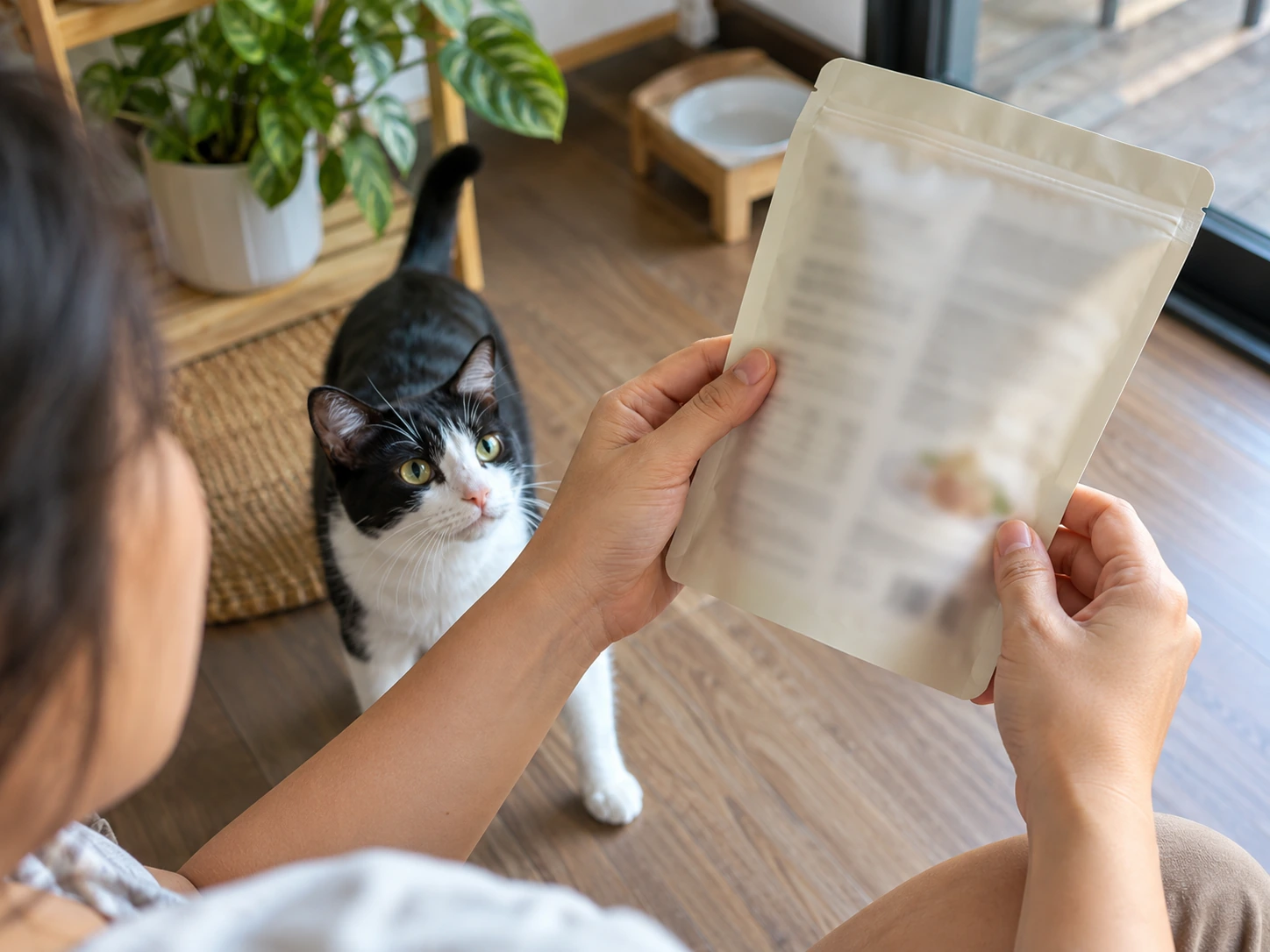
Can pets eat wet food every day?
Yes — provided it’s a complete and balanced recipe, which you can confirm from the animal feed registration number on the label (code 07 in Thailand). Food like that can replace a main meal every single day. Supplementary foods, snacks and treats can also be given daily, but they’re designed to add flavour and variety rather than to stand in for a meal, so they should be served alongside a main meal to make sure your pet’s full daily nutritional needs are met.
How to Read the Label in Ten Seconds
Pet food sold in Thailand carries a ten-digit animal feed registration number issued by the Division of Animal Feed and Veterinary Products Control, Department of Livestock Development. Take 01 07 67 0466 as an example — each group means something different.
- Group 1 (01): produced in Thailand. 02 would mean imported.
- Group 2 (07): the food type. This is the one to look at.
- Group 3 (67): the Buddhist-calendar year of registration (2567 = 2024).
- Group 4 (0466): the registration sequence number.
Each type has its own role. None is better than another — they’re simply used differently.
| Code | Type | Role |
|---|---|---|
| 07 | Nutritionally complete food | Serves as a main meal; can replace a meal every day |
| 08 | Supplementary food | Given alongside a main meal to add variety |
| 09 | Snacks and treats | Something to enjoy, served alongside a main meal |
| 10 | Therapeutic diets | Used on veterinary advice |
The advantage of checking the animal feed registration number is that it’s the same standard across every brand, unlike front-of-pack copy and marketing claims, which each manufacturer words differently.
Every pet food recipe must be registered with the Department of Livestock Development, so the registration number is verifiable information you can use to compare products across brands.
The short version, before it goes in the basket
Turn the pack over and find the second group of digits in the registration number.
- 07 → pet food that works as a main meal, every day
- 08 and 09 → can be given alongside a main meal, every day, to add flavour and variety
- 10 → should be used on veterinary advice
Simply noticing the registration number on the pack puts you in a far better position to choose appropriately, rather than relying only on the claims printed on the front.
The Benefits of Feeding Wet Food Regularly
1. Extra water with every meal
Wet food has a high moisture content, unlike dry food, which contains far less (check the figure for each recipe on the label). Pets that don’t drink much therefore take in additional water as they eat — particularly useful for cats, many of which simply don’t go to the bowl on their own. Fresh water should still be available at all times.
2. A more tempting aroma and flavour
The stronger smell helps stimulate appetite, which is useful with fussy eaters, with older pets whose sense of smell has declined, during hot weather when they eat less, and while settling in after a house move.
3. A soft texture that’s easy to chew
Well suited to young animals whose teeth aren’t fully developed, to senior pets, and to any pet with dental issues that make hard kibble difficult to manage.
4. More accurate portioning
Because it comes in cans or pouches of a known weight, and the energy value per 100 g is usually stated on the label, you can work out the daily requirement far more precisely than by eyeballing a scoop of dry food.
Frequently Asked Questions
1. Can wet food be given every day?
Yes, if it’s a complete and balanced recipe suited to your pet’s life stage, fed in the amount recommended on the label. If the wet food is a treat or a supplementary food, it shouldn’t be used as a daily main meal — but it can be served alongside one.
2. Does wet food cause weight gain or dental problems?
Wet food doesn’t directly cause either. The main factors are how much you feed and how you care for your pet’s teeth. Wet food usually has fewer calories per gram than dry food, but feeding over the recommended amount will still add weight. As for teeth, neither ordinary wet food nor ordinary dry food does much real cleaning. The best approach is regular tooth brushing, or oral care products recommended by your veterinarian.
3. How long does an opened wet food keep?
Cover it or transfer it to an airtight container, refrigerate, and use within 1 day for best results, and no later than 2 days. Food left in the bowl at room temperature shouldn’t sit for more than 2–4 hours, especially in hot weather.
In Summary
Wet food can be fed every day, as long as you pick the right type. Start by turning the pack over and checking the second group of digits in the registration number: 07 can serve as a main meal, 08 and 09 go alongside a main meal, and 10 should be used on veterinary advice.
Beyond the taste, wet food helps your pet take in extra water at mealtimes — a genuine benefit for cats that drink little. Feed the right amount, keep fresh water available at all times, and look after your pet’s teeth regularly, and every meal can be something you both feel good about.
More About Wet Food Every Day
We hope this guide to wet food every day helps you care for your pet with confidence. Explore Hi-Life dog food, or keep reading our article 5 Benefits of Wet Pet Food. For more expert information, visit WSAVA Global Nutrition Guidelines.